The Stemma delivery system

A controlled delivery system.
From scope to close-out.

EngOS connects the engagement from first scope to final controlled record so source information stays linked, approvals are defined and technical, project and commercial decisions remain traceable.

One governed data thread · Human approval at every consequential gate

Linked project controls

One basis carried through every phase.

Scope is frequently restated across estimates, proposals, schedules, registers, reports and invoices. Stemma links those records to a common accepted basis and carries governed information forward.

Defined responsibilities and approval gates reduce repeated entry, clarify handovers and preserve the relationship between the technical work, its programme and its commercial record.

01Less re-entry

Scope, responsibilities and commercial assumptions remain linked as the job evolves.

02Earlier visibility

Programme, budget, blockers and approvals update from live project evidence.

03Fewer interfaces lost

Models, reviews, decisions, actions and changes share the same controlled context.

04Cleaner close-out

Approved files, transmittals, registers and commercial records are already assembled.

One connected delivery flow

Every phase starts with what the last phase already knows.

No separate shadow schedule. No proposal that disappears after award. No model detached from the decisions that shaped it.

01 Understand

Turn an open brief into an engineering basis.

RFQs, scopes and supporting files are structured into disciplines, interfaces, assumptions, exclusions, risks, questions and delivery scenarios.

  • Conversational estimate engine
  • AI-assisted scope workbench
  • Scenario and option comparison
  • Capacity and capability checks
02 Commit

Align the technical and commercial promise.

The selected basis becomes a controlled proposal with work packages, deliverables, resources, review cycles, programme, price and protections.

  • Rate-linked estimating and margin control
  • Staff plan and responsibility structure
  • NDA, terms and exploratory gates
  • Client and management approvals
03 Engineer

Build inside a shared technical context.

Parametric equipment, site geography, reality capture and controlled documents are connected to the same project, schedule and review state.

  • Automated parametric modelling
  • Globe, terrain and factory models
  • Detailed imagery and elevation data
  • Discipline, project and client reviews
04 Deliver

Make progress visible while it is happening.

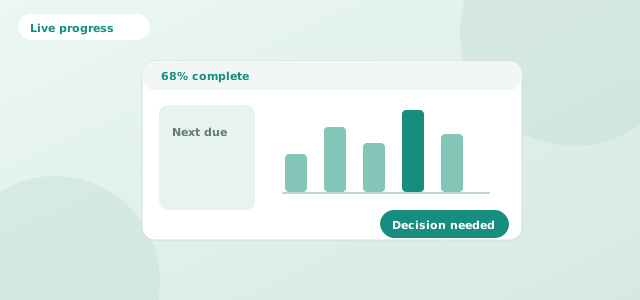
Work, meetings, actions, blockers, documents, costs and forecast dates update a live project view instead of waiting for the next report cycle.

  • Phase-level programme and dependencies
  • Live progress and client reporting
  • Transcript-derived minutes and actions
  • Change control before baseline impact
05 Close

Finish with a usable project record.

Issued files, approvals, transmittals, decisions, invoices and payment evidence remain linked to the accepted scope and final project state.

  • Controlled SharePoint publication
  • Registers updated from project events
  • Invoice and payment reconciliation
  • Traceable revision and audit history
Connected capabilities

One system around the engineering team.

Each capability removes a handoff. Together they create a continuous technical, commercial and documentary record.

Scope & commercial

From uncertainty to an approved basis.

Scope analysis, options, estimates, rate cards, gross margin, proposals, staff plans, review terms, confidentiality controls and formal approvals remain version-linked.

Project controls

Programme, effort and progress in one view.

Deliverable phases, dependencies, planned work, time evidence, capacity, blockers and live progress reporting reveal schedule and budget pressure early.

Document control

Review and publish without losing the source.

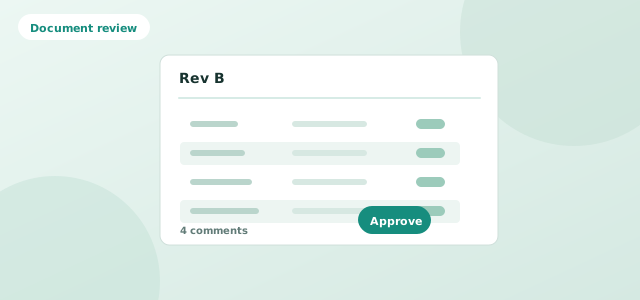
Native working files, review copies, comments, outcomes, approvals, PDF records, transmittals and SharePoint metadata follow a controlled workflow.

Automated modelling

Reusable geometry with a deterministic rebuild path.

AI helps structure intent; a parametric kernel builds the model. Components carry dimensions, ports, semantic parts, versions, configurations and publication evidence.

Spatial engineering

See the project in its real-world frame.

Project regions, field breakdown structures, disciplines, coordinates, annotations and engineering models are placed in a governed globe and local site frame.

Reality capture

Bring the existing plant into the design room.

iPhone LiDAR, mesh and high-detail splat capture support brownfield context, remote walk-throughs, measurements, scan revisions and visible change comparison.

Meetings & change

Turn discussion into controlled action.

Scheduled reviews, transcript evidence, drafted minutes, action and decision registers, scope-change identification and approval routes keep decisions moving.

Operations & finance

Connect operations and finance to delivery.

Capability, resources, procurement, contracts, assurance, invoice control, hosted payments and accounting reconciliation connect to the work they support.

Detailed project maps

Use current site evidence before a line is committed.

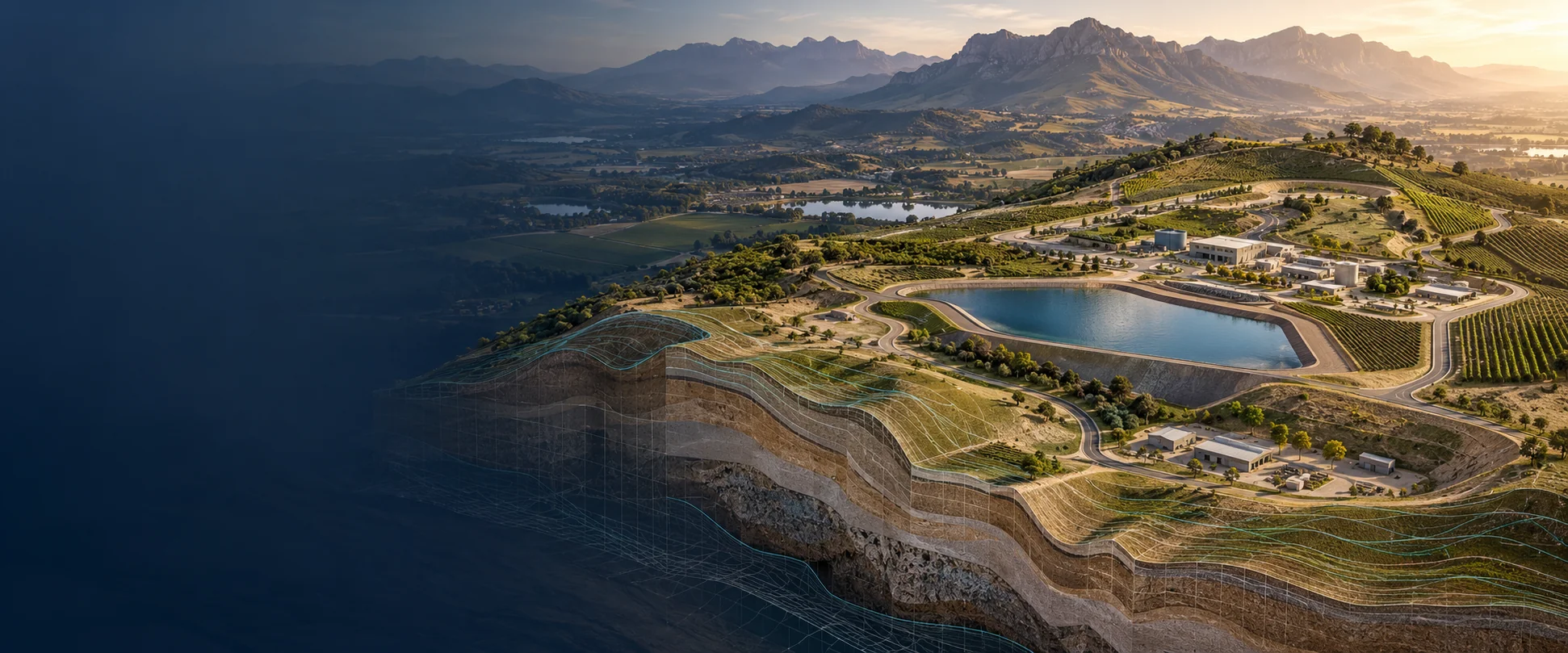
For selected project regions, Stemma can source the most appropriate available commercial optical imagery, surface data and terrain data, then place it into the project’s controlled spatial frame.

A project does not need premium data everywhere. We define the area that matters, compare suitable datasets, route the purchase for approval and retain the source, date, resolution and licence with the project evidence.

More accurate contextCurrent roads, structures, stockpiles, vegetation and access constraints can be visible before design decisions are fixed.
Better terrain decisionsSurface and bare-earth elevation options improve early routing, grading, drainage, earthworks and constructability conversations.
Fewer avoidable errorsModels start in a stronger real-world context, reducing stale-background assumptions and late interface discoveries.
Clear provenanceThe selected dataset and its engineering use remain traceable instead of becoming an anonymous image in a drawing.

Detailed mapping strengthens engineering context and early decisions. Survey-grade control and statutory survey requirements remain governed by the project basis.

Project spatial stackOne aligned view
04
Engineering modelsEquipment · structures · routes · issues
03
Surface modelBuildings · vegetation · current features
02
Detailed optical imageryRecent available visual site context
01
Terrain modelBare earth · levels · natural form
WGS84 anchorLocal engineering frame
Governed automation

Repeatable process.
Accountable decisions.

Automation does not replace accountable engineering. It replaces the repeated copying, chasing, formatting and status assembly that normally sits around it.

Registers update from governed events Review routes follow the project responsibility structure Progress reports read the live project state Meeting records start from retained transcript evidence Commercial records remain linked to accepted scope Reusable models and templates improve with every controlled version
Illustrative delivery scenarios

What the connected system changes in practice.

These illustrative composites are written in delivery form to show how the Stemma workflow operates end to end. They are not claims about named client engagements.

Illustrative scenario · Brownfield options assessment

Three off-gas abatement options were compared on one controlled basis.

The client’s RFQ, process data and emissions objectives were structured into three comparable configurations. The study team used current site imagery, terrain context and a targeted reality capture to test footprint, tie-ins and access before developing the process, mechanical, structural and electrical packages.

Delivered through the system
  • Option-specific mass and energy balances, equipment lists and Class 5 cost bases
  • Parametric concept models positioned in the brownfield site frame
  • Weekly model and progress reviews with transcript-derived minutes and actions
  • One traceable trade-off matrix linking constructability, operability, risk and lifecycle cost

Practical effect: interfaces were challenged while options were still cheap to change, and the recommendation carried its technical and commercial evidence into the final report.

Illustrative scenario · Crushing and conveying concept

The route, equipment and project basis developed together.

A project region was defined on the globe, terrain and imagery were aligned, and reusable conveyor, transfer and support components were configured into alternatives. The scope workbench converted the preferred concept into deliverables, discipline effort, review cycles and a phase-level programme.

Spatial route comparisonReusable equipment modelsLinked estimate and schedule

Practical effect: the concept report, model, estimate and implementation basis described the same solution instead of four slightly different ones.

Illustrative scenario · Live factory retrofit

A difficult installation was reviewed before the site was disturbed.

Colour LiDAR and high-detail splat capture brought the operating area into Factory Models. Proposed equipment was reviewed against the captured plant, comments were pinned in 3D, and scan revisions were compared as site conditions changed.

Remote brownfield walk-throughMeasured change evidenceMobile client review

Practical effect: the team resolved access, support and installation questions against shared visual evidence, reducing avoidable site assumptions and rework.

Automation with accountability

Fast does not mean ungoverned.

AI may read, classify, draft and compare. Deterministic services calculate commercial values and rebuild parametric geometry. Named people approve scope, engineering decisions, publications, changes and payments.

Versioned evidence Role-controlled decisions Human approval gates Traceable audit history Client-visible progress Controlled source records
Project enquiries

Establish the delivery basis for your requirements.

Share an open scope for an indicative planning basis, select a Governed Service, or discuss a wider programme with our engineering team.

Review engagement routes